For many web content owners and editors, the phrase “ADA compliance” can sound intimidating. The idea of making a site fully accessible often feels overwhelming, but it doesn’t have to be. At the University of Iowa, the goal is simple: ensure that every website is usable by everyone.
Why does this matter? Because accessibility isn’t just about avoiding penalties—it’s about making sure everyone can access essential services online. In this post, we’ll explain what ADA Title II means, why it’s important, and how you can make sure your site is compliant.
What is ADA Title II?
Under Title II of the Americans with Disabilities Act, public institutions are required to provide equal access to digital content. That means your website must meet accessibility standards. To help achieve this, the university uses one (of many) tools called Siteimprove. This platform scans your site, identifies accessibility issues, and provides actionable steps for improvement. If your site isn’t yet in Siteimprove, you can get it added by following the instructions provided here. Once your site is added, the most important metric to watch is your ADA Title II compliance score.
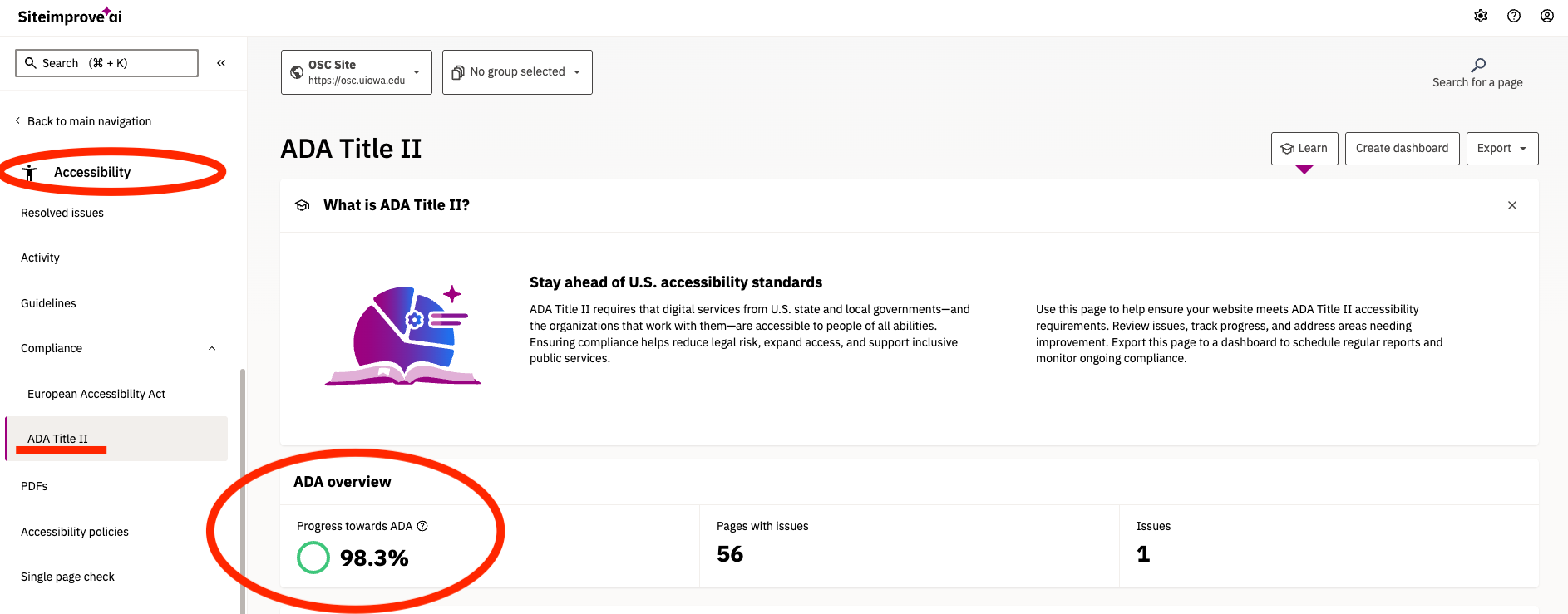
The ADA Title II score is more than just a number—it’s a reflection of how well your site meets federal accessibility requirements. This score is what evaluators look at when determining compliance, and failing to meet these standards can result in penalties.
How is this different than my Digital Certainty Index (DCI) score?
It’s easy to confuse these two metrics, but they serve different purposes. The DCI score measures overall site health, including accessibility, SEO, and quality assurance. The ADA Title II score, on the other hand, zeroes in exclusively on accessibility compliance. Think of it as a focused lens within the broader picture of your site’s performance.
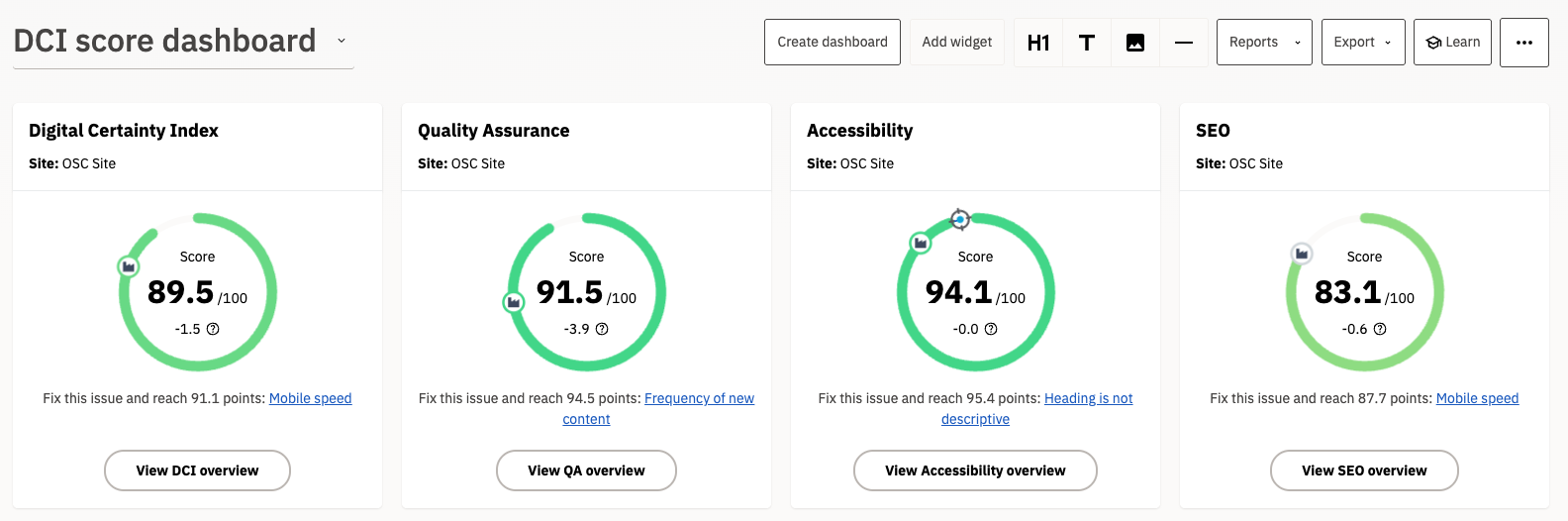
Because the ADA Title II score is a filter within the DCI score, the numbers will look different—and that’s expected. It is important to remember that even if your overall site health score (DCI) is low, you can still meet accessibility requirements by focusing on your ADA Title II compliance score. While the DCI score measures many aspects of site health, Title II zeroes in on legal accessibility standards. These scores are different, and Title II compliance is the priority, which means your site must meet these requirements first. Ultimately, the ADA Title II score is the one that matters most for compliance. It’s also important to understand that scores don’t tell the whole story. If your site has strong overall scores but a low ADA Title II score, even small issues can create significant risk for the university and your website. Address these now to stay ahead of the Department of Justice’s 2026 deadline.
We recommend that departments and units here at Iowa, maintain a minimum Siteimprove DCI score of 94%. This score includes WCAG A/AA, ARIA, and best practice checks. Your first priority should always be your ADA Title II score, since those issues relate directly to legal compliance. After addressing any ADA Title II issues, focus on keeping your overall DCI score at or above 94%. If you notice your ADA Title II score dropping at any point, address those issues immediately as legal compliance must always come first.
Ensuring compliance
We recommend assigning a team member to regularly monitor Siteimprove. This person should check for broken links, review your ADA Title II compliance score, and address any issues flagged by the tool. Tackling these tasks gradually, step by step, will help prevent feeling overwhelmed later and ensure your site stays accessible over time.
Not sure where to start?
Your first priority should be improving your ADA Title II compliance score. If you have questions or need guidance, connect with the Accessibility Taskforce team. We’re here to help you understand requirements and take the right steps. Additionally, you can also use the “Ask a Question” box to share concerns or request clarification. This is the best way to bring issues to our leadership team whether it’s something you don’t understand, a topic that needs attention, or a barrier you’ve identified.
Accessibility is an ongoing commitment, not a one-time task. By regularly monitoring your Siteimprove dashboard, fixing broken links, and improving your ADA Title II compliance score, you’ll create a more inclusive experience for all users. Taking small steps now prevents bigger challenges later and ensures your University of Iowa website meets the standards that matter most. Start today, and make accessibility a priority for the future.